
Friday, December 12, 2025
Vertex Public
No Result
View All Result
  • Home
  • Business
  • Entertainment
  • Finance
  • Sports
  • Technology
  • Home
  • Business
  • Entertainment
  • Finance
  • Sports
  • Technology
No Result
View All Result
Morning News
No Result
View All Result
Home Business

China’s Oil Pumping Energy Breaks All Information

News Team by News Team
December 12, 2025
in Business
0
China’s Oil Pumping Energy Breaks All Information
0
SHARES
0
VIEWS
Share on FacebookShare on Twitter


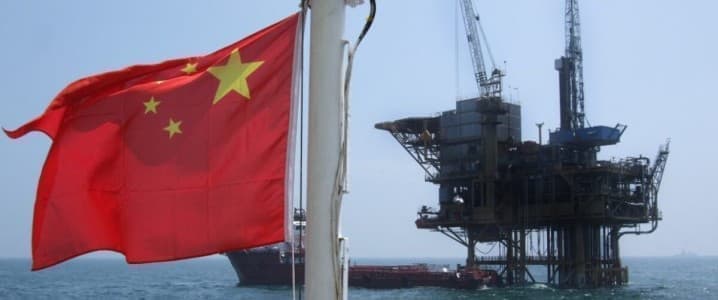
China is closing 2025 with the strongest home crude output in its trendy historical past, ending its Seven-12 months Motion Plan (2019–2025) with measurable good points. Nationwide manufacturing has risen from 3.8 million b/d in 2020 to a mean of 4.3 million b/d in 2025, a roughly 12% improve, pushed by accelerated drilling exercise, rising unconventional output, and probably the most vital restructuring of its upstream sector in a long time. The growth displays Beijing’s strategic goal to strengthen power safety by means of home provide, at the same time as total demand continues to develop.

The present reshaping of China’s upstream started in 2020, when the federal government changed administrative allocation of mining and hydrocarbon rights with a market-oriented bidding and public sale framework, later codified below the 2025 Mineral Assets Legislation. That reform signalled a break from legacy state task practices and opened the door for China’s privately owned home corporations to take part in exploration acreage alongside nationwide champions. In 2025, the Ministry of Pure Assets held six licensing rounds protecting 23 blocks, marking probably the most intensive launch of acreage to non-state Chinese language operators up to now.

These structural adjustments and rising funding capital have had seen regional results. Tianjin lifted output from 632,000 b/d in 2020 to 785,000 b/d in 2025, the only largest regional improve, whereas Xinjiang superior from 571,000 to 649,000 b/d as deep and tight-reservoir testing expanded. Heilongjiang eased barely decrease from 604,000 to 579,000 b/d, underscoring the maturity of Daqing-era legacy fields and the strain to interchange declining manufacturing.

Regardless of the coverage opening to personal corporations, the business stays dominated by state-owned enterprises. PetroChina is the most important oil producer, averaging 2.5 million b/d in 2025 and holding round 1.2 million km2 of onshore acreage throughout the Sichuan, Tarim, Ordos, Junggar, Songliao and Qaidam basins, spanning standard, tight, and shale developments as the corporate intensifies unconventional exploration.

Associated: EIA: US Crude Inventories Sag As Oil Merchandise Develop

CNOOC (China Nationwide Offshore Firm) has been the standout in output progress, increasing manufacturing from 690,000 b/d in 2020 to about 900,000 b/d in 2025, supported by 650,000 km2of offshore acreage throughout the Bohai Gulf and South China Sea. Though traditionally an offshore-focused producer, CNOOC has moved to broaden its onshore presence as new performs emerge and the corporate positions itself towards useful resource focus threat. In the meantime, one other Chinese language oil and gasoline state-owned main Sinopec (with 600,000 b/d of manufacturing in 2025) maintains substantial upstream weight in Sichuan, Tarim, Subei and the onshore Bohai Basin, supported by round 700,000 km2 of onshore acreage and 100,000 km2  offshore, consolidating its function throughout oil and gasoline corridors within the nation’s southwest and much west.


With the Seven-12 months Plan pushing state producers to develop the seek for home reserves, China’s accelerated exploration is beginning to ship materials outcomes. CNOOC’s Bozhong 26-6 discovery in 2023, a shallow-water reservoir in Bohai that occurs to be the world’s largest metamorphic-hill play, estimated at 200 million m3 of oil and gasoline in place, moved from discovery to first manufacturing in early 2025 — an unusually quick turnaround for a frontier reservoir. PetroChina’s unconventional program proved equally consequential. In late September 2025, the corporate confirmed 1.15 billion barrels of shale oil in place within the Gulong zone of the Songliao Basin, anticipated to peak at 130,000–140,000 b/d, whereas already in early December PetroChina reported that the block surpassed 1 million tonnes of annual output. In Xinjiang’s Junggar Basin, drilling depths reached 9,056 meters, the basin’s deepest effectively and the second deepest onshore in China. Sinopec has additionally entered new useful resource territory with its Qiluye-1 effectively within the Sichuan Basin, which examined business shale oil and gasoline at 2,000 meters with state media citing 100 million tons of crude potential, indicating for the primary time a commercially viable crude reserve base in Southwest China.

Simply as China’s oil and gasoline resurgence gathers tempo, overseas traders have found that the door is quietly closing. ConocoPhillips, energetic in China because the Eighties, now solely retains a 49% stake in components of the Penglai Oilfield by means of its Chinese language subsidiary after operatorship was transferred to CNOOC in 2014, representing merely a legacy involvement slightly than full-scale operation. Chevron, as soon as positioned throughout a number of offshore PSCs, relinquished its Bohai Gulf and South China Sea blocks and retained pursuits solely within the Chuandongbei sour-gas PSC by means of its subsidiary, although the ultimate discipline’s commissioning in June 2025 was described in business reporting as “the tip of Chevron’s legacy” in that undertaking. Whereas overseas corporations publicly specific curiosity in taking part in China’s new exploration alternatives, Beijing seems largely unmoved by the enchantment of overseas capital or expertise. No farm-in transactions have been reported, underscoring how geopolitical pressure and strict limits on overseas possession in strategic sectors proceed to constrain worldwide entry to China’s upstream.

This growth in home manufacturing, mixed with the opening of acreage to personal Chinese language companies, would possibly counsel strain on imports volumes; but the information tells a distinct story. China’s seaborne crude imports have held regular at 10.5 million b/d since 2023 (with extra 850,000 b/d of Russian oil delivered by means of a pipeline), at the same time as nationwide manufacturing climbed from 4.0 million to 4.3 million b/d, leaving imports constantly protecting round 70–75% of whole consumption. The vast majority of these barrels come from Saudi Arabia, Russia, Iraq, Brazil and Iran, which provide grades tailor-made to the wants of China’s coastal refining complexes.

Over the previous 20 years, China’s largest refineries have been designed, expanded or upgraded to course of particular imported crude grades – significantly medium and heavy bitter barrels – which can be extra economical for producing fuels and petrochemical feedstock than a lot of China’s lighter, higher-cost home crude. With consumption projected to rise and refinery configurations structurally aligned with overseas grades, imports stay elementary to provide. New discoveries (whether or not unconventional onshore or shale, shallow-water or deepwater) require lengthy growth cycles earlier than they meaningfully contribute, suggesting that home good points will reasonable, however not displace import dependence. China is producing extra oil at residence, however the structure of its refining system ensures the nation should proceed shopping for most of it overseas.

China enters 2026 with a stronger home manufacturing base, a extra diversified set of operators, and momentum in unconventional and offshore exploration. CNOOC’s drilling marketing campaign in Bohai Bay exhibits no signal of slowing, and the corporate is probably going so as to add one other 40,000 b/d in 2026 after three years of steady progress. PetroChina continues to be willingly assembly the targets set in Beijing, but its personal reviews spotlight the uncomfortable trade-off behind the acceleration: its useful resource base has shrunk by a internet 200 million barrels prior to now three years, indicating manufacturing is exceeding the pace of reserve additions. The quicker China accelerates its upstream push, the earlier – and sharper – the flip in direction of its inevitable decline shall be.

For now, nevertheless, the trajectory stays upward. China has cemented its place because the world’s sixth-largest oil producer, lifting output by round 100,000 b/d year-on-year in 2025, and one other nationwide improve of no less than 70,000 b/d seems inside attain because of CNOOC’s and PetroChina’s bold drilling targets. Lasting shift or high-speed prelude to slowdown, China’s upstream revival is heading into the part that can expose its resilience and potential to develop – or its ceiling.

By Natalia Katona for Oilprice.com

Extra High Reads From Oilprice.com

Oilprice Intelligence brings you the indicators earlier than they grow to be front-page information. This is similar knowledgeable evaluation learn by veteran merchants and political advisors. Get it free, twice every week, and you may all the time know why the market is transferring earlier than everybody else.

You get the geopolitical intelligence, the hidden stock information, and the market whispers that transfer billions – and we’ll ship you $389 in premium power intelligence, on us, only for subscribing. Be part of 400,000+ readers immediately. Get entry instantly by clicking right here.

READ ALSO

Greenback staggers to 3rd straight weekly drop as buyers ponder Fed outlook

Rostrum Pacific secures $150m from Crayhill Capital to ‘speed up’ music catalog acquisition technique


China is closing 2025 with the strongest home crude output in its trendy historical past, ending its Seven-12 months Motion Plan (2019–2025) with measurable good points. Nationwide manufacturing has risen from 3.8 million b/d in 2020 to a mean of 4.3 million b/d in 2025, a roughly 12% improve, pushed by accelerated drilling exercise, rising unconventional output, and probably the most vital restructuring of its upstream sector in a long time. The growth displays Beijing’s strategic goal to strengthen power safety by means of home provide, at the same time as total demand continues to develop.

The present reshaping of China’s upstream started in 2020, when the federal government changed administrative allocation of mining and hydrocarbon rights with a market-oriented bidding and public sale framework, later codified below the 2025 Mineral Assets Legislation. That reform signalled a break from legacy state task practices and opened the door for China’s privately owned home corporations to take part in exploration acreage alongside nationwide champions. In 2025, the Ministry of Pure Assets held six licensing rounds protecting 23 blocks, marking probably the most intensive launch of acreage to non-state Chinese language operators up to now.

These structural adjustments and rising funding capital have had seen regional results. Tianjin lifted output from 632,000 b/d in 2020 to 785,000 b/d in 2025, the only largest regional improve, whereas Xinjiang superior from 571,000 to 649,000 b/d as deep and tight-reservoir testing expanded. Heilongjiang eased barely decrease from 604,000 to 579,000 b/d, underscoring the maturity of Daqing-era legacy fields and the strain to interchange declining manufacturing.

Regardless of the coverage opening to personal corporations, the business stays dominated by state-owned enterprises. PetroChina is the most important oil producer, averaging 2.5 million b/d in 2025 and holding round 1.2 million km2 of onshore acreage throughout the Sichuan, Tarim, Ordos, Junggar, Songliao and Qaidam basins, spanning standard, tight, and shale developments as the corporate intensifies unconventional exploration.

Associated: EIA: US Crude Inventories Sag As Oil Merchandise Develop

CNOOC (China Nationwide Offshore Firm) has been the standout in output progress, increasing manufacturing from 690,000 b/d in 2020 to about 900,000 b/d in 2025, supported by 650,000 km2of offshore acreage throughout the Bohai Gulf and South China Sea. Though traditionally an offshore-focused producer, CNOOC has moved to broaden its onshore presence as new performs emerge and the corporate positions itself towards useful resource focus threat. In the meantime, one other Chinese language oil and gasoline state-owned main Sinopec (with 600,000 b/d of manufacturing in 2025) maintains substantial upstream weight in Sichuan, Tarim, Subei and the onshore Bohai Basin, supported by round 700,000 km2 of onshore acreage and 100,000 km2  offshore, consolidating its function throughout oil and gasoline corridors within the nation’s southwest and much west.

With the Seven-12 months Plan pushing state producers to develop the seek for home reserves, China’s accelerated exploration is beginning to ship materials outcomes. CNOOC’s Bozhong 26-6 discovery in 2023, a shallow-water reservoir in Bohai that occurs to be the world’s largest metamorphic-hill play, estimated at 200 million m3 of oil and gasoline in place, moved from discovery to first manufacturing in early 2025 — an unusually quick turnaround for a frontier reservoir. PetroChina’s unconventional program proved equally consequential. In late September 2025, the corporate confirmed 1.15 billion barrels of shale oil in place within the Gulong zone of the Songliao Basin, anticipated to peak at 130,000–140,000 b/d, whereas already in early December PetroChina reported that the block surpassed 1 million tonnes of annual output. In Xinjiang’s Junggar Basin, drilling depths reached 9,056 meters, the basin’s deepest effectively and the second deepest onshore in China. Sinopec has additionally entered new useful resource territory with its Qiluye-1 effectively within the Sichuan Basin, which examined business shale oil and gasoline at 2,000 meters with state media citing 100 million tons of crude potential, indicating for the primary time a commercially viable crude reserve base in Southwest China.

Simply as China’s oil and gasoline resurgence gathers tempo, overseas traders have found that the door is quietly closing. ConocoPhillips, energetic in China because the Eighties, now solely retains a 49% stake in components of the Penglai Oilfield by means of its Chinese language subsidiary after operatorship was transferred to CNOOC in 2014, representing merely a legacy involvement slightly than full-scale operation. Chevron, as soon as positioned throughout a number of offshore PSCs, relinquished its Bohai Gulf and South China Sea blocks and retained pursuits solely within the Chuandongbei sour-gas PSC by means of its subsidiary, although the ultimate discipline’s commissioning in June 2025 was described in business reporting as “the tip of Chevron’s legacy” in that undertaking. Whereas overseas corporations publicly specific curiosity in taking part in China’s new exploration alternatives, Beijing seems largely unmoved by the enchantment of overseas capital or expertise. No farm-in transactions have been reported, underscoring how geopolitical pressure and strict limits on overseas possession in strategic sectors proceed to constrain worldwide entry to China’s upstream.

This growth in home manufacturing, mixed with the opening of acreage to personal Chinese language companies, would possibly counsel strain on imports volumes; but the information tells a distinct story. China’s seaborne crude imports have held regular at 10.5 million b/d since 2023 (with extra 850,000 b/d of Russian oil delivered by means of a pipeline), at the same time as nationwide manufacturing climbed from 4.0 million to 4.3 million b/d, leaving imports constantly protecting round 70–75% of whole consumption. The vast majority of these barrels come from Saudi Arabia, Russia, Iraq, Brazil and Iran, which provide grades tailor-made to the wants of China’s coastal refining complexes.

Over the previous 20 years, China’s largest refineries have been designed, expanded or upgraded to course of particular imported crude grades – significantly medium and heavy bitter barrels – which can be extra economical for producing fuels and petrochemical feedstock than a lot of China’s lighter, higher-cost home crude. With consumption projected to rise and refinery configurations structurally aligned with overseas grades, imports stay elementary to provide. New discoveries (whether or not unconventional onshore or shale, shallow-water or deepwater) require lengthy growth cycles earlier than they meaningfully contribute, suggesting that home good points will reasonable, however not displace import dependence. China is producing extra oil at residence, however the structure of its refining system ensures the nation should proceed shopping for most of it overseas.

China enters 2026 with a stronger home manufacturing base, a extra diversified set of operators, and momentum in unconventional and offshore exploration. CNOOC’s drilling marketing campaign in Bohai Bay exhibits no signal of slowing, and the corporate is probably going so as to add one other 40,000 b/d in 2026 after three years of steady progress. PetroChina continues to be willingly assembly the targets set in Beijing, but its personal reviews spotlight the uncomfortable trade-off behind the acceleration: its useful resource base has shrunk by a internet 200 million barrels prior to now three years, indicating manufacturing is exceeding the pace of reserve additions. The quicker China accelerates its upstream push, the earlier – and sharper – the flip in direction of its inevitable decline shall be.

For now, nevertheless, the trajectory stays upward. China has cemented its place because the world’s sixth-largest oil producer, lifting output by round 100,000 b/d year-on-year in 2025, and one other nationwide improve of no less than 70,000 b/d seems inside attain because of CNOOC’s and PetroChina’s bold drilling targets. Lasting shift or high-speed prelude to slowdown, China’s upstream revival is heading into the part that can expose its resilience and potential to develop – or its ceiling.

By Natalia Katona for Oilprice.com

Extra High Reads From Oilprice.com

Oilprice Intelligence brings you the indicators earlier than they grow to be front-page information. This is similar knowledgeable evaluation learn by veteran merchants and political advisors. Get it free, twice every week, and you may all the time know why the market is transferring earlier than everybody else.

You get the geopolitical intelligence, the hidden stock information, and the market whispers that transfer billions – and we’ll ship you $389 in premium power intelligence, on us, only for subscribing. Be part of 400,000+ readers immediately. Get entry instantly by clicking right here.

Tags: breaksChinasOilpowerPumpingrecords

Related Posts

Greenback staggers to 3rd straight weekly drop as buyers ponder Fed outlook
Business

Greenback staggers to 3rd straight weekly drop as buyers ponder Fed outlook

December 12, 2025
Rostrum Pacific secures $150m from Crayhill Capital to ‘speed up’ music catalog acquisition technique
Business

Rostrum Pacific secures $150m from Crayhill Capital to ‘speed up’ music catalog acquisition technique

December 11, 2025
Venezuela opposition chief seems in Oslo for Nobel award
Business

Venezuela opposition chief seems in Oslo for Nobel award

December 11, 2025
Residence gross sales in Israel proceed to hunch
Business

Residence gross sales in Israel proceed to hunch

December 10, 2025
DGCA summons IndiGo CEO Pieter Elbers, prime officers on Dec 11
Business

DGCA summons IndiGo CEO Pieter Elbers, prime officers on Dec 11

December 10, 2025
TSMC Maintains Consensus Purchase Ranking With Over 20% Upside to $355 Worth Goal As of Early December
Business

TSMC Maintains Consensus Purchase Ranking With Over 20% Upside to $355 Worth Goal As of Early December

December 10, 2025

POPULAR NEWS

Corporations caught in digital providers tax crossfire as CRA gained't concern refunds

Corporations caught in digital providers tax crossfire as CRA gained't concern refunds

July 4, 2025
CRA hits taxpayer with hefty ‘international property’ penalty

CRA hits taxpayer with hefty ‘international property’ penalty

March 11, 2025
PETAKA GUNUNG GEDE 2025 horror movie MOVIES and MANIA

PETAKA GUNUNG GEDE 2025 horror movie MOVIES and MANIA

January 31, 2025
An 80/20 Inventory-Heavy Portfolio in Retirement May Be Ultimate

An 80/20 Inventory-Heavy Portfolio in Retirement May Be Ultimate

October 16, 2024
Here is why you should not use DeepSeek AI

Here is why you should not use DeepSeek AI

January 29, 2025
China’s Oil Pumping Energy Breaks All Information
Business

China’s Oil Pumping Energy Breaks All Information

December 12, 2025
Monster Island – MOVIES & MANIA %
Entertainment

Monster Island – MOVIES & MANIA %

December 12, 2025
Stars’ Roope Hintz exits late with damage in loss to Wild
Sports

Stars’ Roope Hintz exits late with damage in loss to Wild

December 12, 2025
Greenback staggers to 3rd straight weekly drop as buyers ponder Fed outlook
Business

Greenback staggers to 3rd straight weekly drop as buyers ponder Fed outlook

December 12, 2025
Overcoming Monetary Hopelessness When Life Feels Not possible
Finance

Overcoming Monetary Hopelessness When Life Feels Not possible

December 12, 2025
Say Goodbye To Again Ache With These Desk Add-Ons And Devices
Technology

Say Goodbye To Again Ache With These Desk Add-Ons And Devices

December 12, 2025
Vertex Public

© 2025 Vertex Public LLC.

Navigate Site

  • About Us
  • Privacy Policy
  • Disclaimer
  • Contact Us

Follow Us

No Result
View All Result
  • Home
  • Business
  • Entertainment
  • Finance
  • Sports
  • Technology

© 2025 Vertex Public LLC.