


Unlock the Editor’s Digest totally free
Roula Khalaf, Editor of the FT, selects her favorite tales on this weekly e-newsletter.
Firms together with Unilever and Kraft Heinz introduced greater than $1tn of asset gross sales in 2025, the best degree in three years, as companies got here below stress from activist buyers to simplify and reignite progress.
Complete asset gross sales and divestments had already reached practically $1.2tn by means of mid-December throughout practically 7,000 transactions, based on knowledge supplier Dealogic, the best degree since 2021.
Conglomerates have fallen out of vogue as buyers gravitate in direction of centered companies in a difficult and unsure financial atmosphere. Activist hedge funds are placing administration groups of such companies below stress to spice up valuations by streamlining operations and releasing up money.
“If you simplify the portfolio and sharpen the fairness story in an unsure atmosphere, these are lower-risk transactions,” mentioned Philipp Beck, head of M&A in Emea for UBS. “It’s sometimes simpler to do a carve-out than an enormous bolt-on, or some kind of transformational transaction.”
A spate of break-ups has hit the buyer sector, which is combating persistently excessive inflation, subdued client spending and altering buyer preferences.
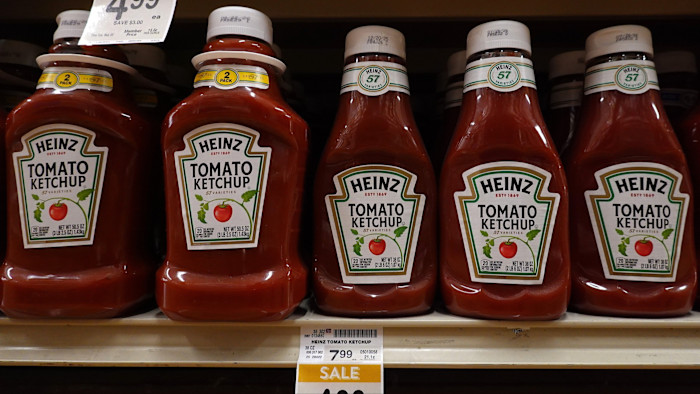
Kraft Heinz mentioned in September it was planning to separate its slower-growth grocery staples from its sauces, spreads and seasonings enterprise, finest recognized for the Heinz model, unravelling a deal that created the packaged meals group a decade in the past.
Different main examples embrace Unilever’s spin-off in December of its ice cream division, named The Magnum Ice Cream Firm, and Keurig Dr Pepper’s plan to separate its espresso and mushy drinks companies, after it completes a €15.7bn deal to purchase European espresso chain JDE Peet’s.
Within the media business, which can also be being upended by disruptive forces, Warner Bros Discovery introduced plans in June to separate its declining cable TV belongings from its streaming and studios arm. The proposal catalysed a bidding battle between Netflix and Paramount.
“Company carve-outs have been an necessary supply of enormous M&A in 2025,” mentioned Stephen Choose, Barclays’ head of Emea mergers and acquisitions. “We count on that to proceed into 2026 as simplification and capital recycling into increased progress, increased returning companies stay a spotlight in boardrooms, in lots of instances catalysed by activist stress.”
Different offers stay within the works. FTSE 100 conglomerate Related British Meals introduced in November that it’s exploring a separation of its fast-fashion chain Primark from its meals enterprise.
Many industrial teams have additionally taken steps to unwind in 2025, akin to New York-listed agricultural provider Corteva, which is splitting its seed and pesticides companies.
In the meantime, BP is in talks over a sale of its $8bn Castrol lubricants arm, cement firm Holcim has spun off its North America division and Honeywell has introduced plans to separate into three corporations, caving into stress from activist Elliott Administration.
“You’re seeing huge corporations break up at a quicker clip as a result of as corporations have gotten bigger, they’ve part items which are scaled, market-leading corporations in their very own proper,” mentioned Tom Miles, international head of M&A at Morgan Stanley.
This previous 12 months has been a file 12 months for activist campaigns, with a Barclays report discovering that 191 had been carried out within the 12 months to October.
Smiths Group — one of many UK’s final, listed industrial conglomerates — offered two of its enterprise items after coming below stress from activist buyers together with Elliott.
Personal fairness companies are sometimes the pure consumers of divested belongings, taking them off the fingers of corporations within the perception that managing them in a extra centered manner can enhance their valuations.